


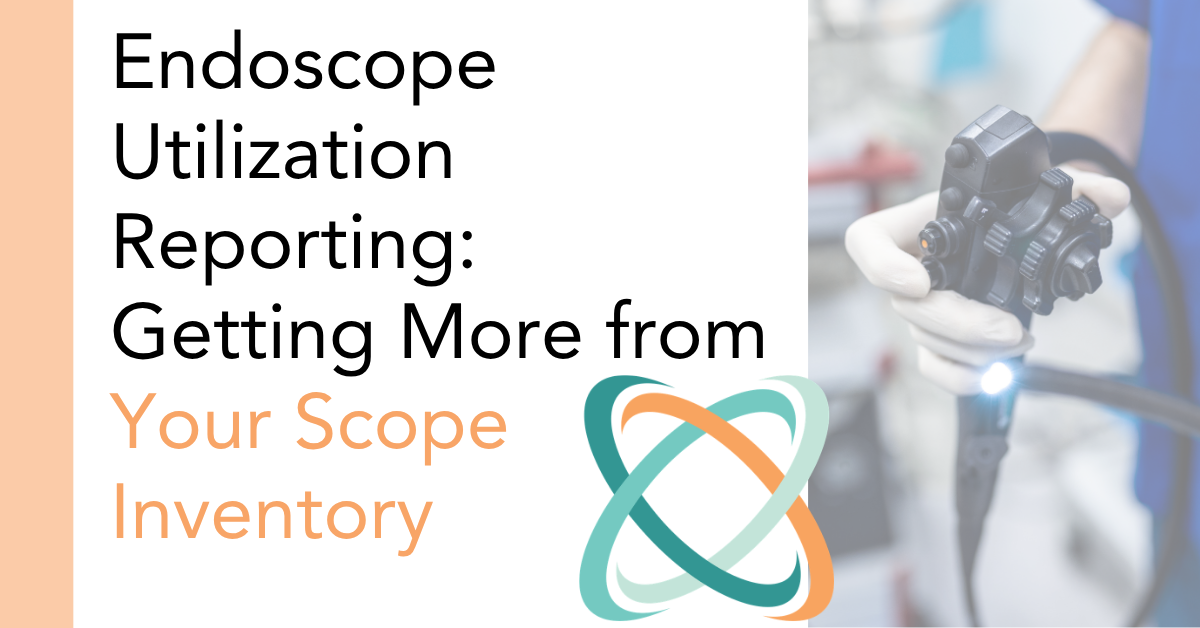
A high-definition colonoscope costs somewhere between $30,000 and $40,000. A single gastroscope or duodenoscope can run higher. Most endoscopy departments carry a fleet of eight to twenty (or more) scopes depending on procedure volume, and that inventory represents a capital commitment in the hundreds of thousands of dollars — one that gets reviewed every budget cycle and questioned every time a repair bill lands on someone’s desk.
Despite that, most departments cannot tell you with any precision how hard each scope is working. They know the scopes are busy. They know some go to repair more than others. They can feel when scheduling is tight and a scope is unavailable at the wrong moment. But the underlying data, such as procedures per scope, idle time between uses, repair frequency by instrument, and peak demand periods by scope type, often lives scattered across paper logs, disconnected tracking sheets, and the memory of whoever has been managing the department longest. That gap between what departments spend on scopes and what they know about how those scopes are being used is where utilization reporting matters.
What Poor Visibility Actually Costs
The most immediate consequence of not tracking utilization is over-purchasing. When a department cannot see that three of its colonoscopes are handling 70 percent of procedure volume while two others sit largely idle, the instinct when capacity feels tight is to request more scopes. Sometimes that instinct is correct. Often, it is not, as the problem is scheduling distribution, not inventory size. Capital requests built on gut feelings rather than usage data tend to either overshoot or miss the mark entirely, and both outcomes are expensive.
Uneven usage also accelerates wear in ways that are not obvious until a repair bill arrives. Endoscopes subjected to above-average insertion frequency, sharp angulation, or high reprocessing cycles degrade faster than the manufacturer’s estimated lifespan would suggest. Departments that rotate their scopes evenly across similar procedure types extend functional life across the whole fleet. Departments that do not end up with a handful of heavily worn instruments cycling in and out of repair while others sit underused. Without utilization data, there is no way to see that pattern developing, let alone correct it.
Scheduling inefficiencies are the third cost, and the one staff feel most directly. When a gastroenterologist needs a specific scope type and the available instrument is already booked or out for service, cases get delayed, rooms sit idle, and someone in scheduling is making phone calls trying to find a solution. Those delays are hard to quantify but easy to observe. Departments that can anticipate peak demand by scope type and schedule proactively around maintenance windows run more predictably than those reacting to availability problems as they occur.
What Utilization Reporting Should Actually Tell You
The baseline metric most departments want first is procedure count per scope: how many times each instrument was used over a given period, broken down by procedure type. That alone starts to surface the workload imbalance problems that lead to premature wear. But procedure count without time context is limited. A scope that ran fifteen procedures in a single day is being used very differently than one that ran fifteen procedures over two weeks, and both situations carry different implications for reprocessing demand and scheduling availability.
Idle time is the metric that tends to surprise department managers the most. Tracking how long a scope sits between reprocessing completion and its next scheduled procedure can reveal whether the bottleneck is scope availability or something upstream like room turnover, reprocessing throughput, or scheduling gaps. A scope that is consistently ready but not being used is a utilization problem. A scope that is consistently in use or in the queue for reprocessing is a capacity problem. The reporting must distinguish between the two or is not actually useful for decision-making.
Repair frequency correlation is the other piece that transforms utilization data from an operational curiosity into a capital planning tool. Knowing that a specific scope has been repaired four times in eighteen months while similar scopes in the same fleet have been repaired once tells you something concrete about that instrument’s condition and remaining useful life. When that repair history is sitting alongside usage volume for the same instrument, the decision about whether to repair or replace becomes a data-driven question rather than a judgment call.
Turning Utilization Data into Better Decisions
Right-sizing a scope inventory is one of the more politically fraught conversations in endoscopy administration, largely because it has historically been impossible to have with much precision. Physicians advocate for more scopes when they feel scheduling pressure. Administration looks at the capital line and asks for justification. Without utilization data, both sides are arguing from incomplete information and the conversation stalls or defaults to whoever makes the stronger case.
Departments with solid utilization reporting can bring a different kind of evidence to that conversation. They can show procedure-per-scope averages across the fleet, identify which scope types are genuinely underserved relative to demand, and demonstrate whether adding inventory or redistributing scheduling is the more effective lever. That is not a small thing when a single capital request can represent a six-figure budget line.
The same data set supports maintenance planning in ways that reduce reactive repair costs over time. When utilization reporting is integrated with maintenance and repair history, departments can move from scheduling reprocessing and service on a fixed calendar to scheduling based on actual usage thresholds. A scope that has run 200 procedures since its last inspection gets flagged differently than one that has run forty. That kind of threshold-based planning extends scope life and reduces the frequency of emergency repairs that interrupt case schedules at the worst possible times.
What to Look for in a Utilization Reporting Tool
The most common failure mode in endoscope tracking tools is that the data is there, but is not accessible when it needs to be. A reporting engine that requires a dedicated IT request to pull a custom date range, or that delivers utilization summaries in a format that cannot be dropped into a capital request document, does not get used consistently. The practical requirement is a dashboard that endoscopy managers and operations leaders can access and interpret without help, with the ability to filter by scope type, date range, and procedure category without a manual export process in between.
Historical trend analysis matters as much as current status. A single snapshot of scope utilization tells you where things stand today. Twelve months of trend data tells you whether workload is growing, whether a particular scope type is being stressed above sustainable levels, and whether a repair pattern is worsening or stabilizing. The departments that use utilization data most effectively are the ones that review it on a regular basis, not just when a problem has already surfaced.
ScopeCycle® endoscope tracking software from NewCura includes a reporting engine built specifically for the decisions endoscopy departments face. Utilization metrics cover procedure counts per scope, usage patterns over time, and repair history by instrument, giving operations leaders the data they need to manage their inventory proactively rather than responding to problems after they develop.
If your department is making scope purchasing decisions without a clear picture of how your current inventory is performing, that is a fixable problem. Contact NewCura to schedule a demo and see what ScopeCycle®’s reporting capabilities look like applied to a department like yours.


